
Picture yourself having just acquired an old master print (say, a Rembrandt etching) at an auction. The print is in a exceptional good state, and you bought it at a reasonable price (“reasonable” meaning in reasonable relation to the size of your wallet, of course). After the auction, this well known old print conaisseur which you watched lingering around the specimens shown at the pre-sale exhibition approaches you and tells you with that calm voice expressing a life full of old master print expertise: “Madam/Sir, I have to to tell you: your print has been Schweidlerized“.
Schweidlerized? What does he mean?
- The print is a fake (“swindle”)
- The print has been skillfully repaired, virtually invisible to the eye, or
- The print was sold (at an auction etc.) at a much higher price than what it is actually worth.
Read on for the solution and the rediscovery of a tremendously valuable book.
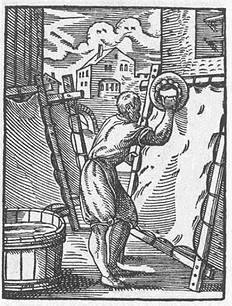 Parchment is made of animal skin, mostly from goat and sheep, which has been dried and scraped under tension. It was the preferred writing support material for manuscripts and maps from around 200 BC until the 16th century, when it was replaced by paper. In the late Middle Ages, town parchment makers (“parchmenters”) had shops in the vicinity of artisans and trade groups. The picture to the left shows a German parchmenter around 1568 [1].
 Oldprints